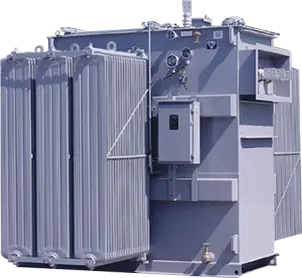
Many electrical installations do not require the capacity of a large industrial transformer. Small commercial properties, workshops, farms, residential buildings, and individual equipment installations often have more modest power requirements. For these applications, a 15 KVA single-phase transformer can provide the voltage conversion needed to operate electrical equipment safely and reliably.
The transformer rating indicates how much apparent power the unit can handle, while the single-phase configuration makes it suitable for electrical systems that do not require three-phase distribution.
Understanding the 15 KVA Rating
KVA stands for kilovolt-amperes and represents the apparent power capacity of a transformer. A 15 KVA transformer is rated to handle up to 15 KVA under its specified operating conditions.
The actual amount of usable power in kilowatts depends on the power factor of the connected load.
For example, at a power factor of 0.8:
15 KVA × 0.8 = 12 kW
At a power factor of 0.9:
15 KVA × 0.9 = 13.5 kW
These figures are simple examples. The permissible loading of an individual transformer depends on its construction, cooling method, ambient temperature, insulation system, and manufacturer’s specifications.
What Makes It Single-Phase?
Single-phase transformers are designed for electrical systems where power is supplied through a single alternating-current phase.
They are commonly used for smaller electrical loads, particularly where three-phase equipment is not required. A 15 KVA single-phase transformer can therefore be useful for individual buildings, small facilities, equipment circuits, and remote electrical installations.
The transformer may step voltage up or down depending on the requirements of the electrical system. The primary and secondary voltage must be specified correctly before the unit is purchased.
Common Applications
A 15 KVA single-phase unit can be used in a variety of settings where electrical demand remains within its rated capacity.
Typical applications include:
- Small offices
- Workshops
- Residential buildings
- Farms
- Retail stores
- Small commercial properties
- Lighting systems
- Control equipment
- Pumps
- Individual machinery
- Remote electrical installations
The suitability of the transformer depends on the equipment being powered. Motors, compressors, pumps, and other inductive loads may draw higher current during startup, so starting requirements should be included in the electrical assessment.
Matching the Transformer to the Load
Transformer selection starts with determining the site’s electrical demand. The nameplate rating of every connected appliance or machine does not necessarily represent the actual maximum demand.
Some equipment operates continuously, while other devices may run only occasionally. Engineers can consider demand factors and diversity when determining the expected load.
For a 15 KVA single-phase transformer, the assessment may include:
- Total connected load
- Maximum expected demand
- Power factor
- Motor starting current
- Operating hours
- Load diversity
- Future equipment additions
A facility currently requiring 10 KVA, for example, may have adequate capacity within a 15 KVA transformer. If the site is expected to add several electrical loads in the near future, the additional demand should be considered before finalizing the transformer size.
Primary and Secondary Voltage
The KVA rating alone is not enough to specify a transformer. The required primary and secondary voltages must also be identified.
The primary voltage corresponds to the incoming supply, while the secondary voltage is the output supplied to the electrical system or equipment.
A transformer specification may include:
- Primary voltage
- Secondary voltage
- Frequency
- KVA rating
- Impedance
- Tap configuration
- Insulation class
- Cooling method
- Enclosure type
Correct voltage selection is essential because the transformer must be compatible with both the incoming supply and the equipment connected to its secondary side.
Dry-Type and Oil-Filled Designs
A 15 KVA single-phase transformer can be manufactured using different insulation and cooling arrangements.
Dry-type transformers use solid insulation rather than liquid insulation. They are often considered for indoor applications, commercial buildings, and locations where oil-filled equipment is unsuitable.
Oil-filled transformers use insulating liquid for electrical insulation and heat transfer. They may be used in outdoor applications and other installations where this construction is appropriate.
The choice depends on the location, environmental conditions, fire-safety requirements, maintenance arrangements, and project specifications.
Efficiency and Electrical Losses
Transformers experience losses while operating. These are generally divided into no-load losses and load losses.
No-load losses occur whenever the transformer is energized, even if the connected equipment is using little power. Load losses increase as the electrical current increases.
For installations where the transformer operates continuously, efficiency can influence long-term operating costs. Comparing loss figures before purchasing can help determine the expected energy performance of different models.
Operating the transformer within its recommended loading range also helps manage heat and electrical stress.
Installation Requirements
A 15 KVA transformer needs an installation location that provides adequate space, ventilation, electrical clearances, grounding, and access for maintenance.
Indoor units should have sufficient ventilation to dissipate heat generated during operation. Outdoor installations may require protection from weather, physical impact, unauthorized access, and water accumulation.
Grounding is a fundamental part of transformer installation. The enclosure and relevant electrical components should be grounded according to the electrical design and applicable standards.
Protective equipment may include circuit breakers, fuses, surge protection, and other devices selected according to the transformer and connected load.
Maintenance and Inspection
Routine maintenance can help identify problems before they develop into equipment failures.
Inspection activities may include checking electrical connections, looking for signs of overheating, examining insulation, and verifying the condition of cooling and protective components.
Oil-filled transformers may require checks for leaks and oil condition. Dry-type transformers should be inspected for dust accumulation, blocked ventilation passages, loose connections, and insulation deterioration.
Thermal imaging can also help identify abnormal heating around terminals and connections.
The manufacturer’s recommended maintenance schedule should be followed, with adjustments based on operating conditions where appropriate.
Selecting the Right Transformer
Before purchasing a 15 KVA single-phase transformer, the electrical requirements should be documented clearly. This includes the input and output voltage, frequency, load characteristics, installation environment, cooling method, and expected operating conditions.
Technical documentation from the supplier should provide details such as transformer dimensions, weight, efficiency, losses, insulation, impedance, testing, and connection arrangements.
Warranty terms, delivery requirements, spare-parts availability, and technical support may also be relevant when comparing suppliers.
A Practical Option for Smaller Electrical Loads
A 15 KVA single-phase transformer can provide a suitable power-distribution option for installations with moderate single-phase electrical demand. Its relatively small capacity makes it appropriate for applications where larger transformers would not be necessary.
The correct choice depends on the actual load rather than the KVA rating alone. Voltage requirements, power factor, starting currents, installation conditions, efficiency, and future expansion should all be reviewed before purchase.
With accurate load calculations, suitable protection, correct installation, and regular maintenance, a 15 KVA single-phase transformer can provide dependable voltage conversion for a wide range of everyday electrical applications.